top of page


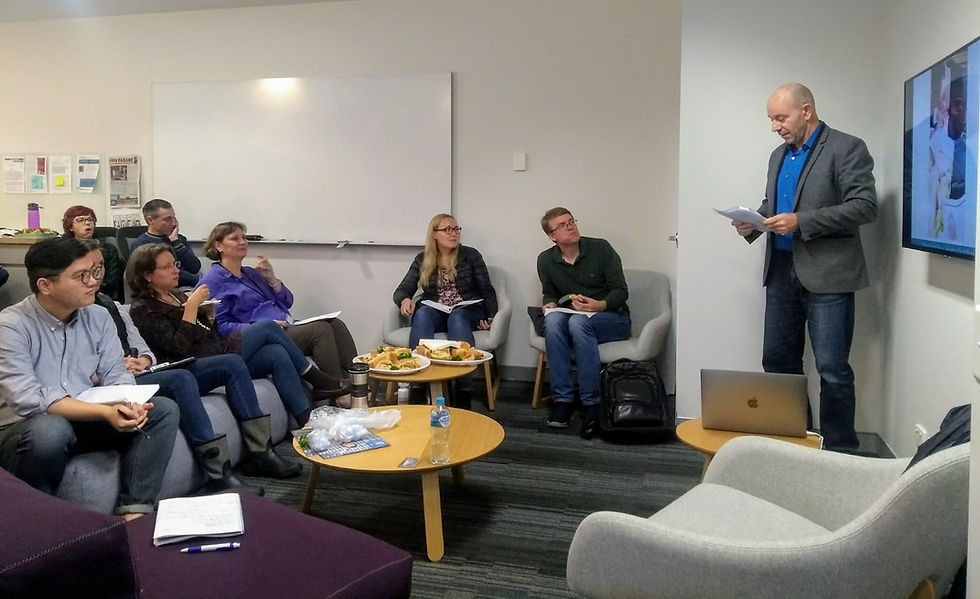
Daniela Andrei presented a talk on ‘A Diversity Framework to Support Flourishing of Mature Workers in Organisations’ at the 2018 UWA Research Forum on Ageing. The theme of this year’s forum was Leading Innovation through Diversity Research Forum: Bridging Research, Policy and Practice for Age Friendly Care.

More than 100 academics as well as representatives of government agencies, NFPs and care providers attended the busy program which included more than 30 presentations on a range of topics related to ageing and care.

Although the program focused mostly on issues related to diversity in age care, Daniela’s talk took a different angle and explored diversity in the context of an ageing workforce. Based on existing research, Daniela argued for a refocus from diversity to inclusion and highlighted the key role of work design and organisational climate. Organisations can reap the benefits of an increasingly age diverse workforce only by implementing work designs that accommodate and celebrate the unique needs and strengths of ageing employees and by building strong acceptance climates.

The Research Forum at UWA created a vibrant space in which very diverse perspectives on the role and implications of diversity in ageing and age care came together in a very lively dialogue. Most interestingly, we were able to hear the voice of participating older people and how they perceive the existing debates and issues around diversity and age care.



Sharon presented a key note presentation on "wise proactivity" in Shanghai at the Shanghai University of Finance and Economics (SUFE) last week. Drawing on her paper with Lena Wang (RMIT) and Jenny Liao (EY) argued that, when people are proactive, they need to be wise in their approach, which means considering the task and strategic context, considering the perspectives of others, and taking into account one's own interests and emotions.

More than 100 scholars and students from across China attended the SUFE symposium on proactivity. There is currently much interest in this topic in China given the country's strategic focus on enhancing innovation (e.g., the Made in China 2025 initiative).

Other key note speakers at the conference were Karoline Strauss (ESSEC, France), Mark Griffin (Curtin University, Australia), and Subra Tangirala (University of Maryland, USA).

One of the highlights of the conference was a "paper development session" in which small groups of students and scholars worked together to identify possible research questions and topics.


FulBright scholar, Ross Andel, visited the Centre for Transformative Work Design (CTWD) this week.

Ross Andel is Professor in the School of Aging Studies and Director of Ph.D. in Aging Studies program. He is a Senior Researcher in the International Clinical Research Center at the St. Anne’s University Hospital in Brno, Czech Republic, and Professor in the 2nd Medical Faculty at Charles University in Prague, Czech Republic.

Using relevant data from the United States, Puerto Rico, Sweden, and Australia, Ross delivered a presentation that took a closer look at how retirement may affect trajectories of cognitive change and risk of cognitive impairment, how work characteristics may further modify post-retirement cognitive outcomes, and what factors may play a role in mitigating the potentially negative influence of retirement on cognitive aging and cognitive impairment.


CTWD's Research Fellow, MK. Ward said Ross presented compelling evidence that the complexity of work done in mid-life can delay onset of cognitive decline. Data suggest cognitive functioning declines after retirement. A key takeaway is that designing work that challenges people through novelty and complexity may be a critical influence on brain health.

Ross also met with several members of the team to discuss collaboration in the future around how work affects cognitive health (Research stream 2).

Follow us

  • LinkedIn
  • Youtube
  • X
CTWD Horizontal_White.png
3459BAL_Future of Work Institute logo_Ke

The Centre for Transformative Work Design

is part of the Future of Work Institute at Curtin University.

© 2026 Centre for Transformative Work Design​​

The Centre acknowledges Whadjuk Nyungar people who remain Custodians of the lands on which we research, learn and collaborate.

bottom of page